
Versicherungen
Open-Source-Tools für Pricing und Underwriting, gebaut in R. Modular, transparent, kein Vendor-Lock-in.
Was wir liefern
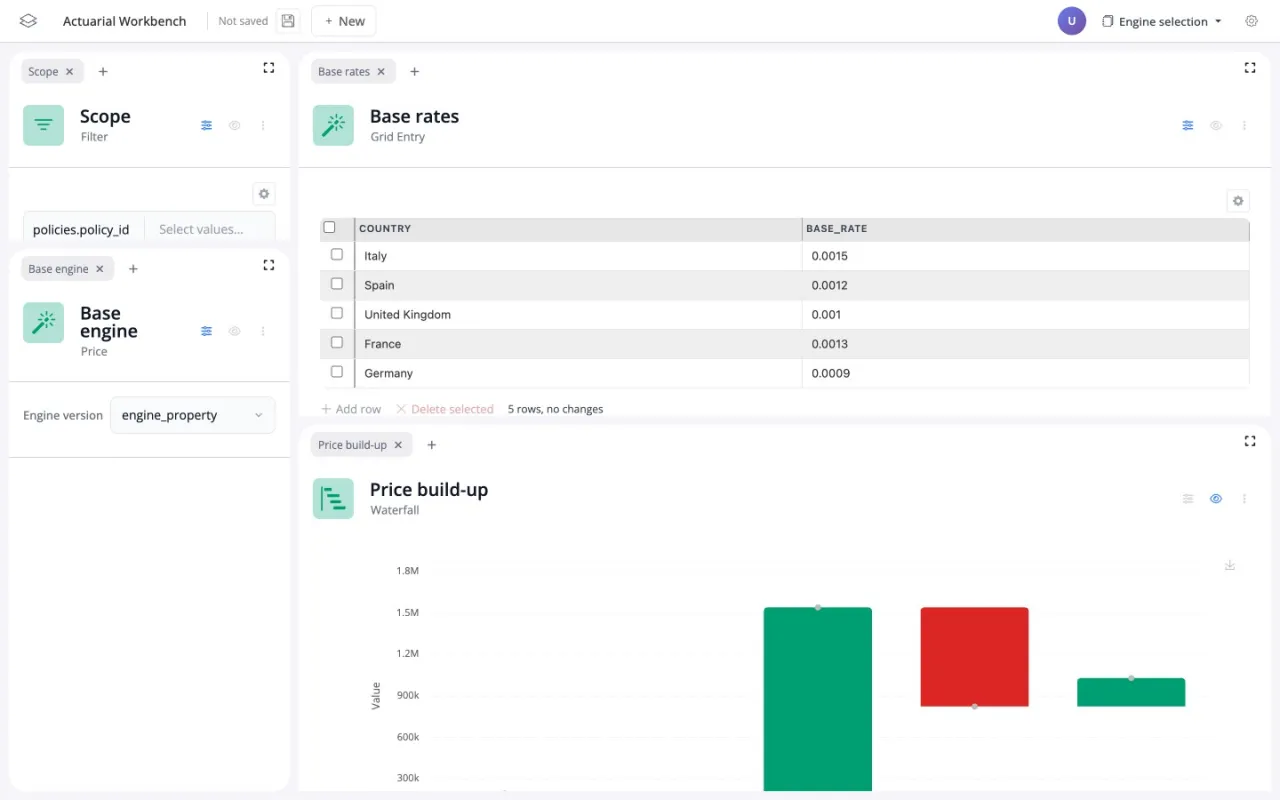
Pricing-Engines, aktuarielle Workbenches und Vergleich verschiedener Pricing-Läufe. Mathematik vom Interface getrennt, nachvollziehbar und einfach anzupassen. Gebaut auf R, dplyr und DuckDB.
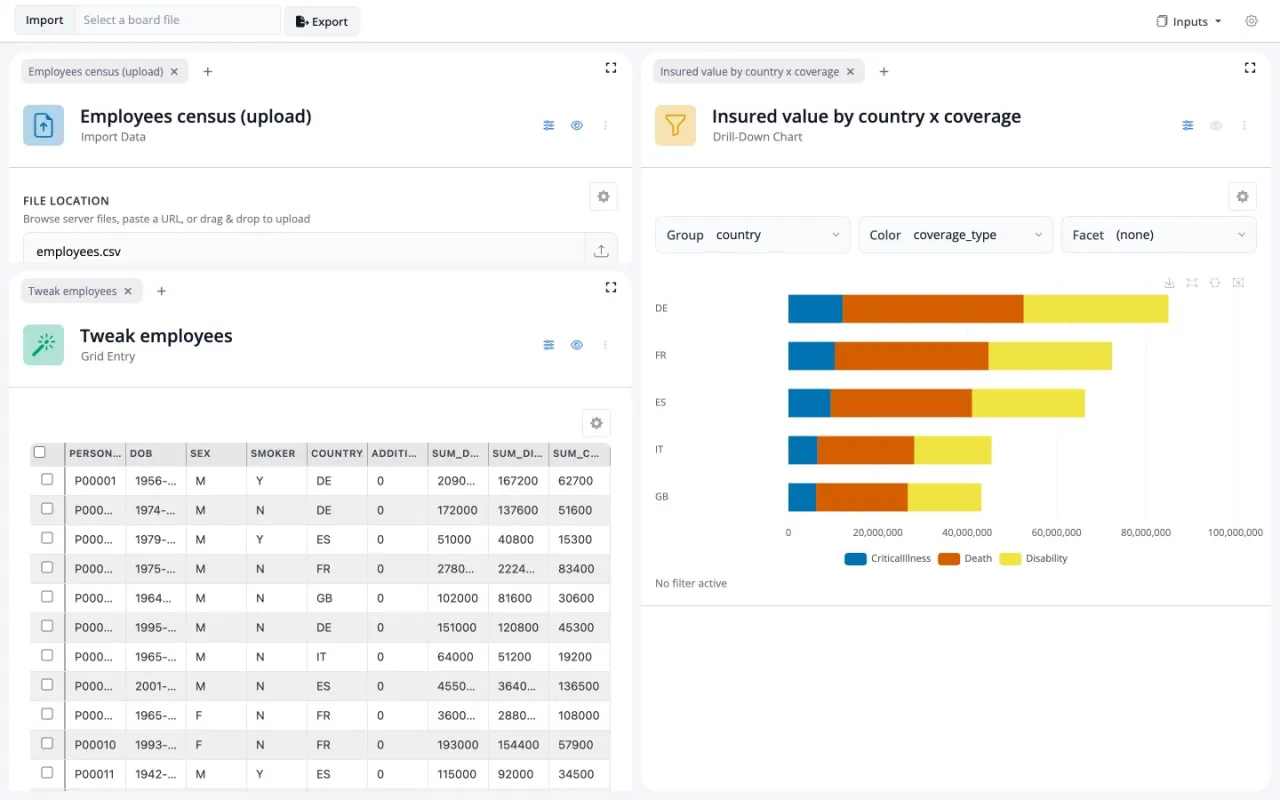
Underwriting-Workbenches, die Mitarbeiterdaten, Schadenhistorie und aktuarielle Tabellen zusammenführen. Gebaut mit dm, dplyr, dbplyr und Shiny.
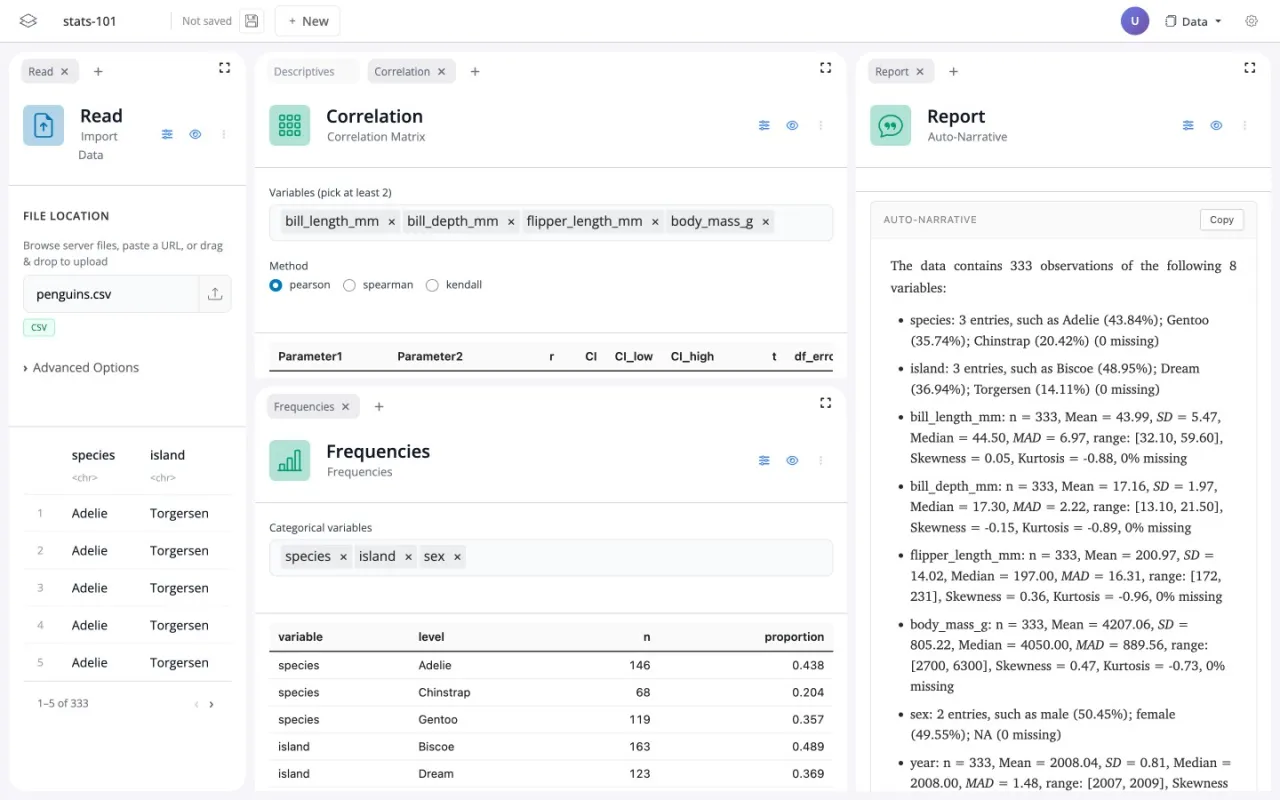
Shiny-Dashboards in R für Schweizer Krankenversicherer. Installationen von Posit Workbench, Connect und Package Manager. Schulungen und Code-Reviews.
Wie wir sie bauen
Gebaut auf R und auf Paketen, die wir mitentwickeln und pflegen: dplyr, tibble, duckdb, duckplyr.
Engine, keine App
Headless Engines
Pricing-Logik lebt in einem eigenständigen R-Paket. Dieselbe Engine läuft als Microservice-REST-API, Kommandozeilen-Tool oder in einer interaktiven R-Session. Die UI ist nur eine Schnittstelle unter vielen.
Lesbar, testbar
Tidy und modular
Tidy Data Frames zwischen jedem Schritt. Kleine, benannte Module. Unabhängig testbar, spartenübergreifend wiederverwendbar. Lesbarer Code, lesbare Mathematik.
Azure-ready, selbst gehostet
Cloud-native
Läuft als Azure Container Apps hinter API Management, auf Posit Connect oder auf hauseigenem Kubernetes. CI/CD via Azure DevOps. Deployment hinter der Firewall.
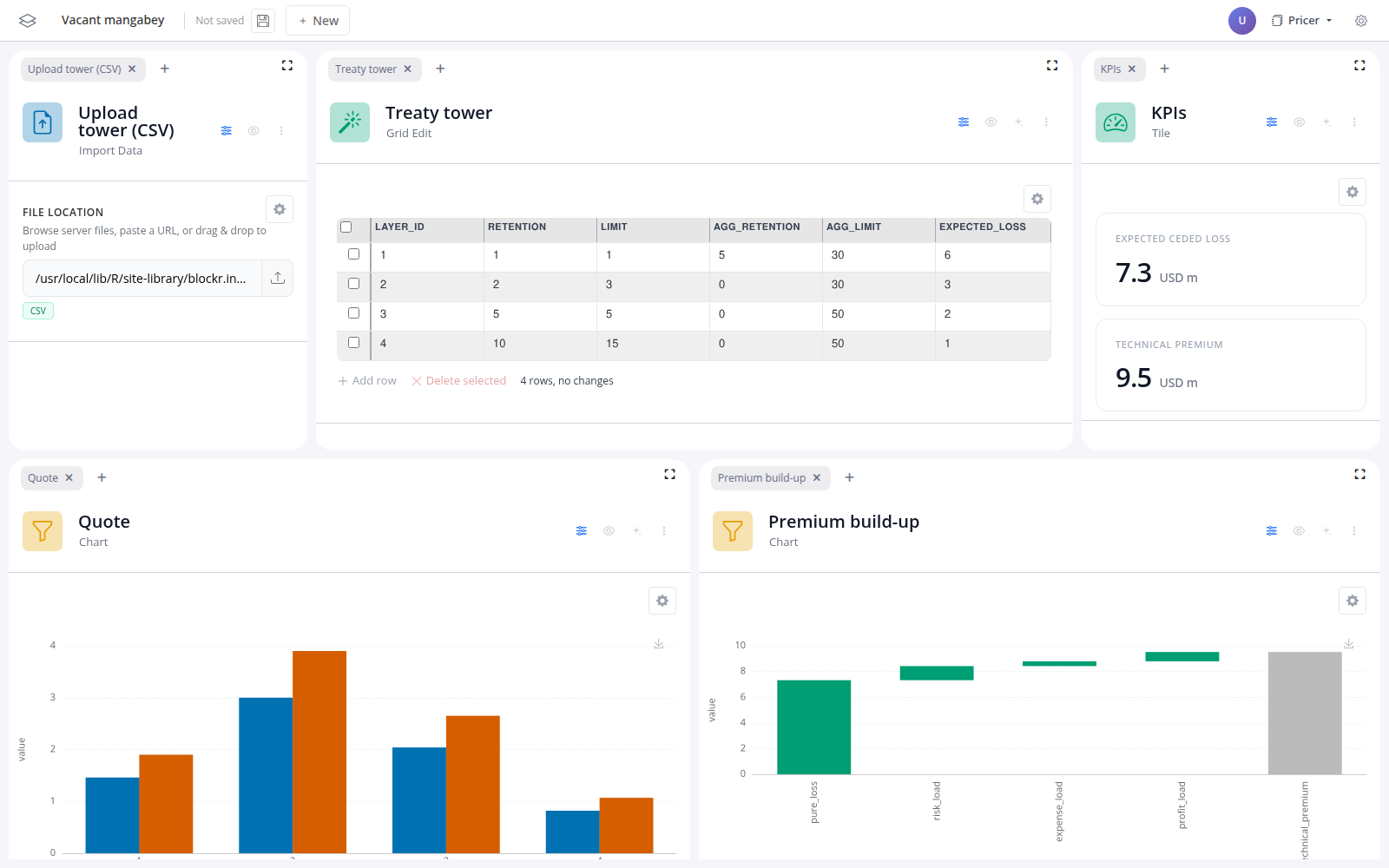
A reinsurance pricing tool, built without code
I built a reinsurance treaty pricing tool from standard blockr blocks, with no code and no insurance-specific adjustments. You can price a layered treaty in the deployed app.
WeiterlesenÜber den Autor
Christoph Sax
Christoph Sax is a passionate economist and data scientist with two decades of experience in R and has extensively consulted dozens of organizations. He is interested in the intersection of economics, statistics and artificial intelligence. He is the author of several R packages and an associate editor of the R Journal. Christoph holds a Ph.D. in economics from the University of Basel and is a founder and partner at cynkra.
Fokus-Projekt
Provides a unifying interface to relational databases in R, with backend packages like RSQLite, RMariaDB and RPostgres for specific databases.
Key Features
- Unified interface for all database operations.
- Supports multiple DB backends like MySQL, SQLite, PostgreSQL, and more.
- Easy data fetching and manipulation within R.
- Comprehensive error handling.
blockr is a framework for data analysis using a web-based point and click user interface. It enables visual programming in R, allowing users to create powerful data workflows through an intuitive interface.
Key Features
- User-Friendly Interface for building data pipelines
- Flexible block-based workflow system
- Extensible with custom blocks (dplyr, AI, IO, SDTM)
- Reproducible and shareable pipelines
- Real-time interactive feedback
dm provides a framework for defining and managing relational data models in R. It allows users to work with related tables, ensuring data integrity and facilitating complex data operations.
Key Features
- Define and manage relational data models.
- Ensure data integrity across related tables.
- Facilitate complex data operations.
- Integrate seamlessly with dplyr for data manipulation.
- Export data models to SQL or use in Shiny applications.
R bindings for DuckDB, an in-process analytical database. DuckDB provides fast columnar storage and efficient query execution without requiring a separate server process.
Key Features
- In-process database, no server required
- Fast columnar storage and analytics
- Direct query on Parquet, CSV, JSON
- Seamless integration with R data frames
duckplyr enhances dplyr by allowing seamless integration with DuckDB for faster data operations. It provides a performance boost for data manipulations while maintaining dplyr's intuitive syntax.
Key Features
- Drop-in replacement for dplyr
- Automatic translation to SQL
- Significantly improved performance
- Compatible with dplyr syntax
Was Kundinnen und Kunden sagen:
Neuste Blogbeiträge
Matteo Tanadini, Christoph Sax /
Does mosquito control work?
Shiny/R
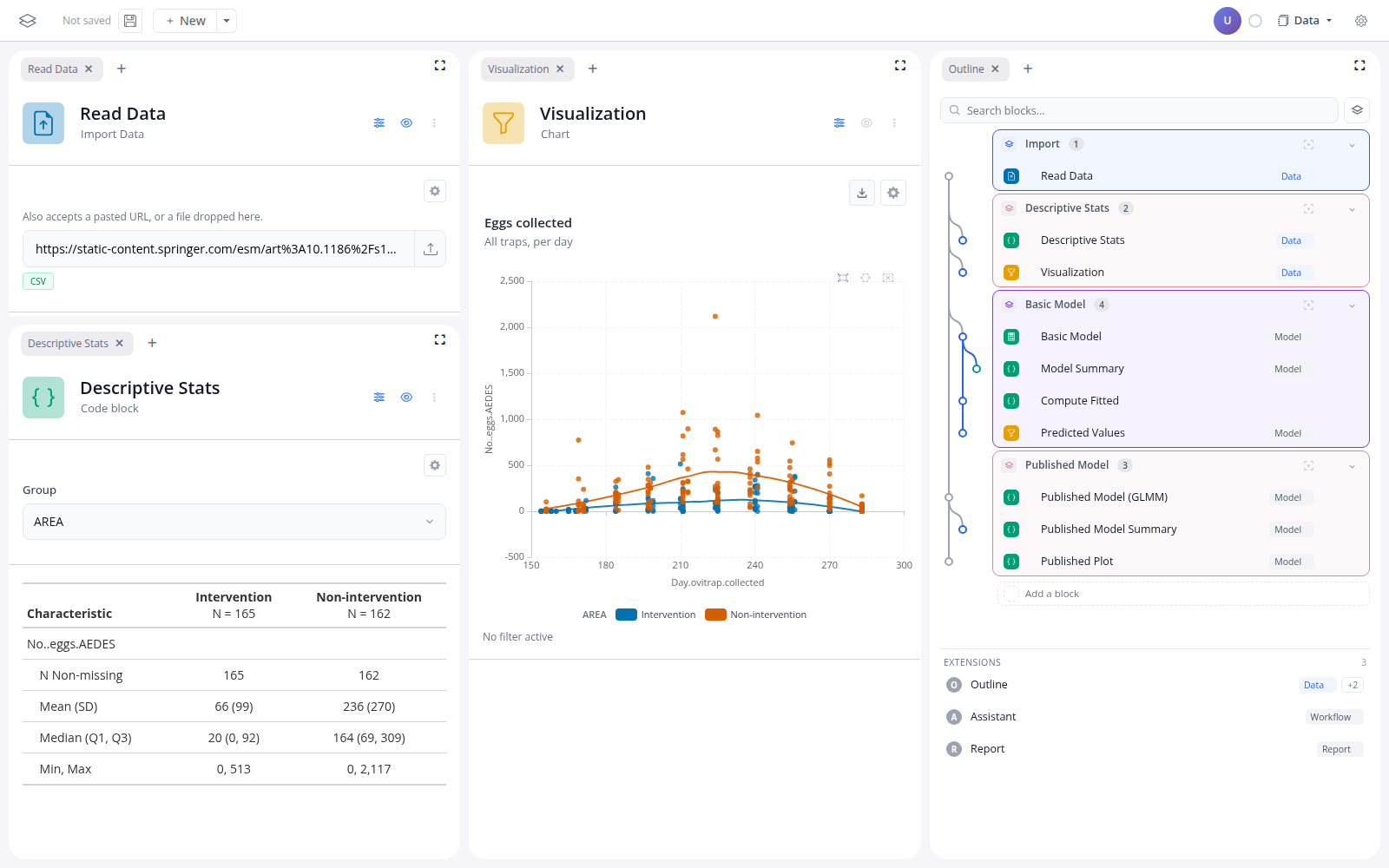
Reproducible statistics without code. At the Swiss Statistics Meeting we refitted a published study on tiger mosquito control by clicking: reading the data from the publisher's website, fitting the models, and exporting the whole analysis as a Quarto report.
David Granjon /
Rebuilding a cycling stage tracker with Claude Code and blockr
Sport/Shiny/R
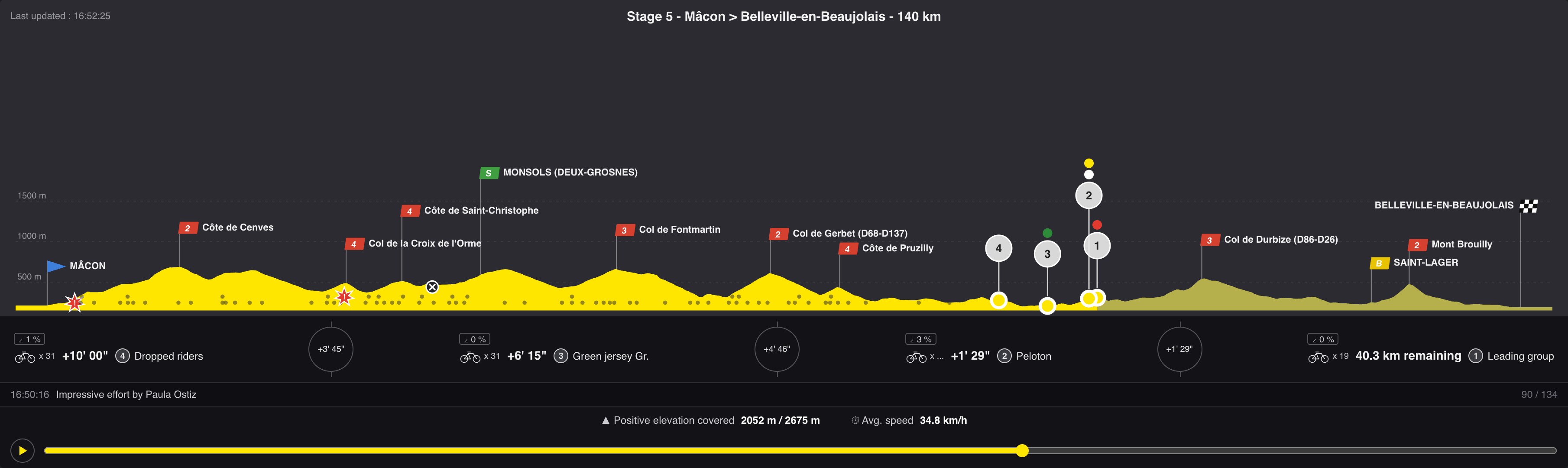
On August 5 the Tour de France Femmes rode out of Mâcon, where I grew up. We recorded the live tracking feed all afternoon, then rebuilt the stage profile from the race center in R so the stage can be replayed any time.
Christoph Sax /
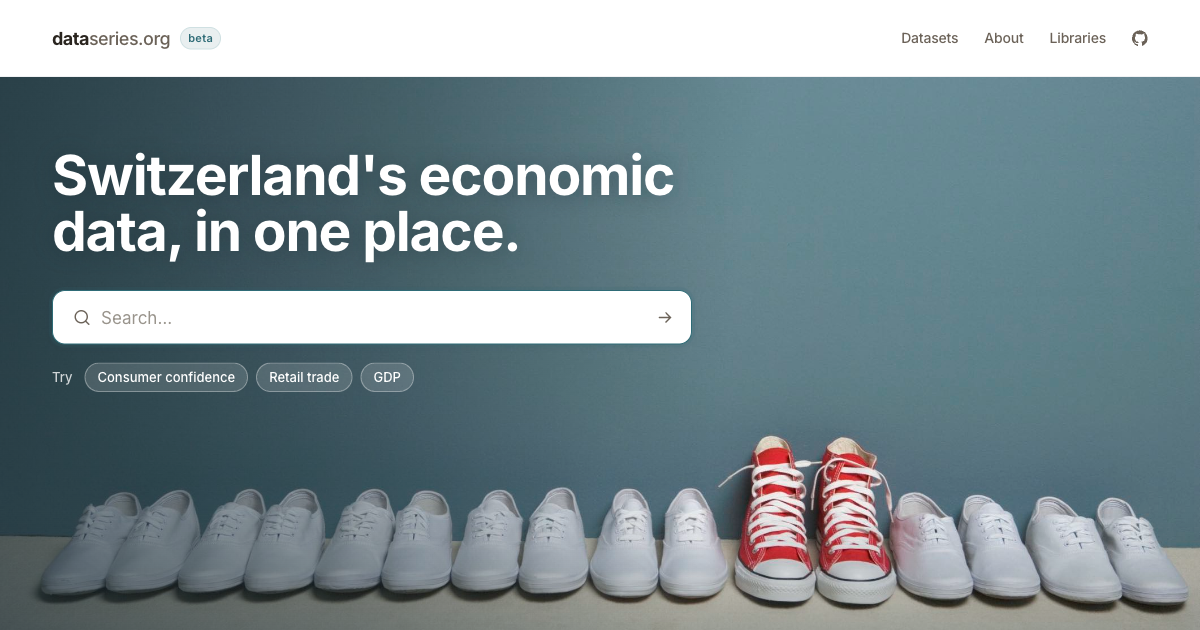
dataseries.org: Relaunch with 70 datasets
R/Data
Ten years after the first alpha, dataseries.org is relaunched: 70 Swiss economic datasets in one place, with a new UI, a public API, and a scraping pipeline that is derived by AI from plain markdown files.
Christoph Sax /
A reinsurance pricing tool, built without code
Shiny/R/Insurance
I built a reinsurance treaty pricing tool from standard blockr blocks, with no code and no insurance-specific adjustments. You can price a layered treaty in the deployed app.
Olajoke Oladipo /
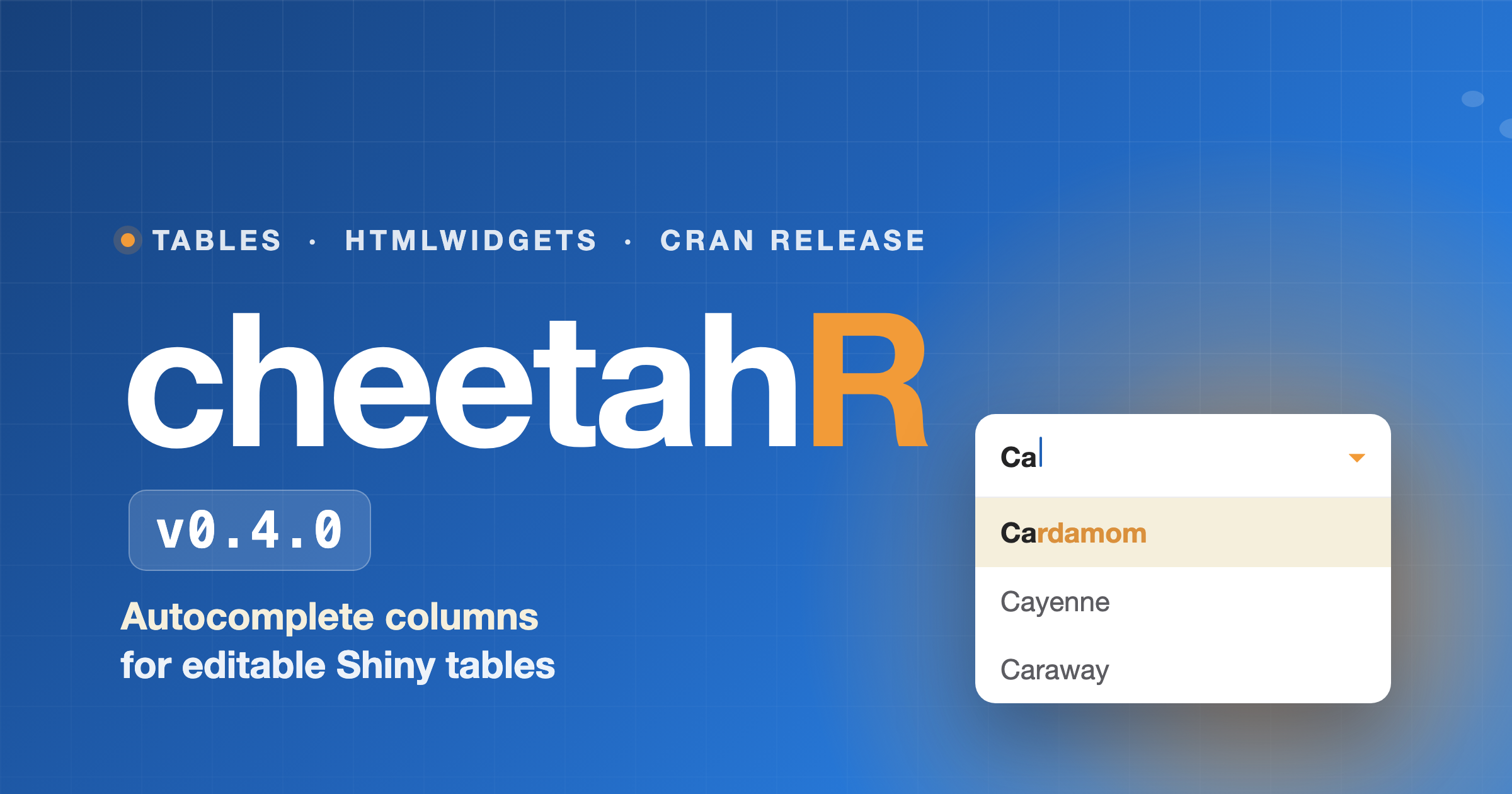
cheetahR 0.4.0: editable Shiny tables get an autocomplete column
R/Tables/htmlWidgets
cheetahR 0.4.0 adds an autocomplete column for editable Shiny tables: it filters a list of known suggestions as the user types, while still letting them commit a value that isn't on the list.
Maëlle Salmon, David Schoch, Kirill Müller /
Three small dots for more readable code
Package development/R
The ellipsis between required and optional arguments makes for more readable code. Here's how we handled it gently in older functions, without breaking users' code.